Let's talk about building serious wealth over the next three decades. If you're in your 30s, time is your greatest asset. The market's short-term noise? It matters less and less the further you look out. 📌
That's why the Vanguard Morningstar Mega Cap Growth ETF (MGK) deserves a spot on your radar. This isn't a flashy, high-risk gamble. It's a concentrated bet on the most dominant, cash-rich companies in the US economy—the ones that are actively shaping the future of technology and AI.
Since its inception in 2007, MGK has delivered a compound annual return of 13.6%, handily beating the S&P 500's 10.9% average over the same period. For a long-term investor, that 2.7% annual difference is the difference between a comfortable retirement and a truly wealthy one. Let's break down why this fund could be the cornerstone of your portfolio.

Why MGK? It's a Mega-Cap Tech Powerhouse 🚀
The fund tracks the Morningstar US Mega Cap Growth Index, which focuses on the 56 largest US-listed companies with the strongest growth characteristics. The result? A portfolio that's heavily tilted toward the tech sector, which has been the epicenter of innovation and profit generation for decades.
Here’s the key: Over 72% of MGK's assets are in tech stocks. This isn't accidental. It's a reflection of where the market's biggest winners live. The fund's top three holdings are a who's who of the AI revolution:
| Stock | MGK Portfolio Weighting |
|---|---|
| Nvidia (NVDA) | 13.52% |
| Apple (AAPL) | 13.19% |
| Microsoft (MSFT) | 9.49% |
Nvidia, in particular, has been a monster. Its data-center GPUs are the industry standard for AI training, and demand has far outpaced supply. This pricing power has sent its stock up over 1,370% since early 2023. While Apple and Microsoft haven't matched that explosive growth, they've still more than doubled, comfortably beating the S&P 500. This isn't just a tech play; it's a play on the very engine of modern economic growth.
The concentration in a handful of mega-cap tech names is the source of both MGK's strength and its potential weakness. Here’s how the bulls and bears see it:
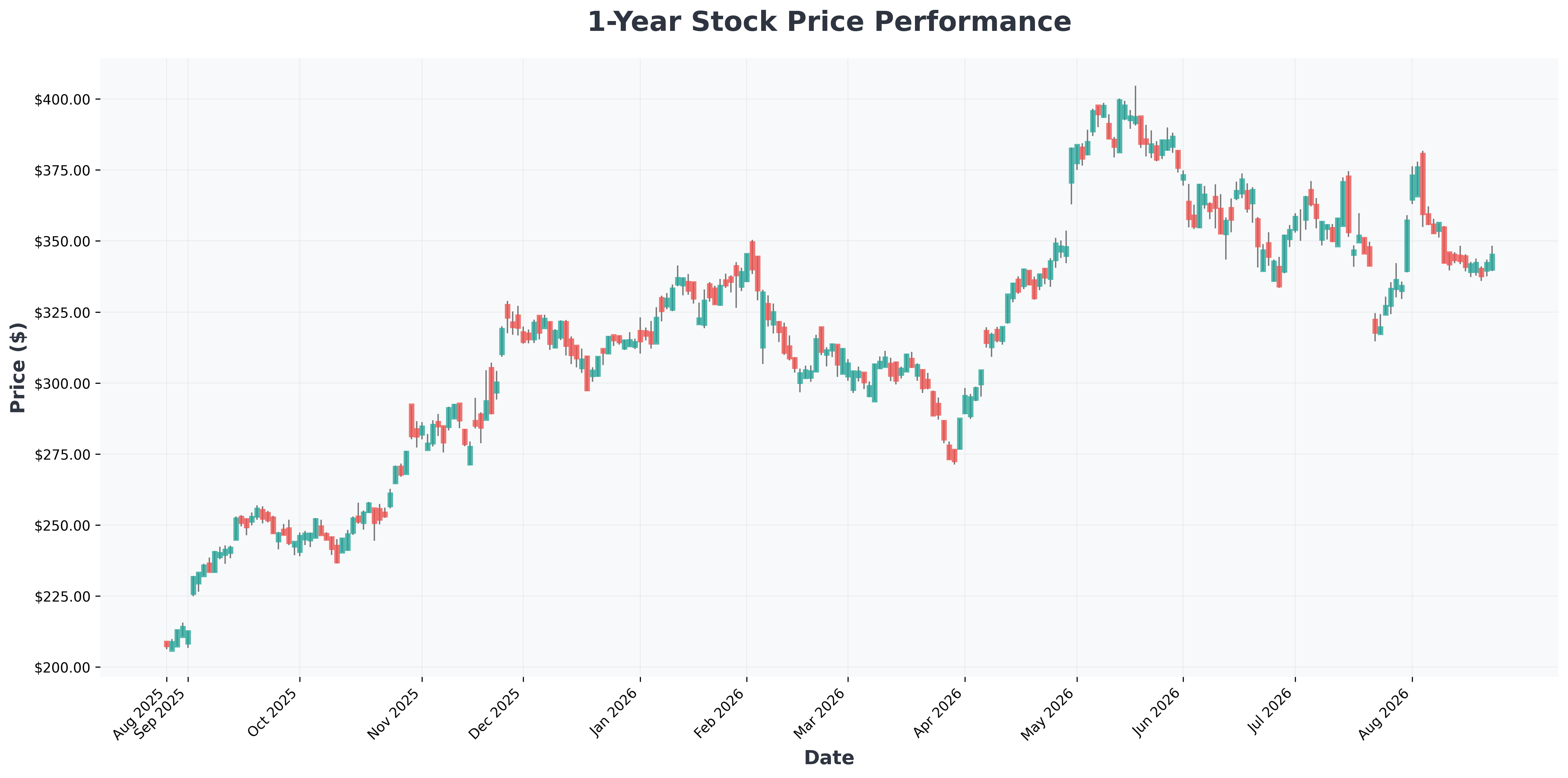

The Math of Patience: Compounding Your Way to $1.3 Million 💰
Let's get down to the numbers that matter. The power of MGK isn't just about picking winners today; it's about what those winners become over 30 years. The difference between a 13.6% and a 10.9% annual return is the magic of compounding.
Let's assume a 35-year-old invests a lump sum of $30,000 today and lets it ride until age 65. Here’s the potential outcome based on historical averages:
| Starting Balance at 35 | Compound Annual Return | Balance at 65 |
|---|---|---|
| $30,000 | 13.6% (MGK) | $1,375,533 |
| $30,000 | 10.9% (S&P 500) | $668,448 |
That's a potential difference of over $700,000! This is the core argument for a growth-oriented strategy in your 30s. You're trading some short-term volatility for a much higher probability of long-term financial security.
📊 In-Depth Fundamental Analysis
| Company | Share Price | P/E Ratio | P/B Ratio | ROE | Operating Margin (OPM) | Revenue Growth |
|---|---|---|---|---|---|---|
| AAPL (Apple) | $310 | 35.54 | 42.11 | 148.75% | 32.62% | 16.40% |
| AMZN (Amazon.com,) | $261 | 21.02 | 5.10 | 30.56% | 13.69% | 19.60% |
| AVGO (Broadcom) | $357 | 59.16 | 19.36 | 37.28% | 48.99% | 47.90% |
| GOOG (Alphabet) | $343 | 17.24 | 6.75 | 48.68% | 34.03% | 24.20% |
| GOOGL (Alphabet) | $347 | 17.40 | 6.82 | 48.68% | 34.03% | 24.20% |
| LLY (Eli) | $1,234 | 41.40 | 32.46 | 102.29% | 54.22% | 47.70% |
| MA (Mastercard) | $599 | 32.97 | 93.71 | 241.20% | 61.11% | 14.10% |
| META (Meta) | $570 | 21.47 | 5.56 | 29.85% | 34.83% | 28.00% |
| MSFT (Microsoft) | $492 | 27.42 | 8.26 | 34.04% | 45.11% | 17.70% |
| NFLX (Netflix,) | $82 | 25.86 | 11.36 | 49.54% | 33.38% | 13.40% |
| NVDA (NVIDIA) | $213 | 32.63 | 26.40 | 114.29% | 65.60% | 85.20% |
| TSLA (Tesla,) | $350 | 324.31 | 15.92 | 4.67% | 1.41% | 25.50% |
| V (Visa) | $384 | 32.72 | 20.36 | 61.19% | 66.13% | 14.40% |

The Verdict: A Core Holding, Not a Gamble ⚖️
MGK is not without risks. Its concentration in mega-cap tech means it will experience gut-wrenching drawdowns during market corrections. For example, a broad AI sell-off would hit this fund hard. Therefore, it shouldn't be your only holding. Pairing it with a broad S&P 500 fund can help diversify and cushion some of that sector-specific risk.
However, the fund's quarterly rebalancing ensures that laggards are replaced by more promising companies, which is a self-correcting mechanism that helps maintain its growth edge over the long run.
The Bottom Line: For investors in their 30s with a long time horizon, MGK offers a compelling, low-cost (0.05% expense ratio) way to own the future of the US economy. It's a 'buy and hold forever' candidate for a core growth allocation.