The S&P 500 Already Owns Your Financials — Do You Really Need More? 📌
If you own an S&P 500 index fund, you already hold the biggest names in finance: Berkshire Hathaway, JPMorgan Chase, Goldman Sachs, Visa, American Express, and Charles Schwab, to name a few.
The question isn't whether you own financials — it's whether you should own more of them.
Over the past 12 months, the roughly 75 large-cap financial stocks inside the S&P 500 have been flat year to date and up just 1% over the past year — one of the weakest sector performances in the index. That underperformance has some investors wondering if financials are a bargain. Others see a warning sign.
Here's the breakdown. 👇

Why Financials Are Struggling 🐻
Several headwinds are pressuring the sector:
- Rate policy risk: Recent Fed rate hikes raise borrowing costs and can squeeze lending margins.
- Sluggish economy: Rising prices in an uncertain macro environment rarely favor banks and brokerages.
- Late-cycle valuations: After a four-year bull market, the odds of a correction rise — and that hits investment managers and brokerages hardest.
- Regional bank volatility: While relaxed regulation and a robust bank M&A market have helped regional banks stage a partial comeback, the broader outlook remains murky.
That's the bear case. But there's a nuance most headlines miss.
The Real Problem Isn't Financials — It's Concentration
The S&P 500's Shiller P/E ratio — a 10-year inflation-adjusted valuation measure — sits near an all-time high of 41.59. The only other time it reached this level was during the dot-com era, and a bear market followed.
That doesn't mean a crash is imminent. It does mean large-cap exposure alone is a concentrated bet. And within that concentration, financials are just one sliver of the risk.
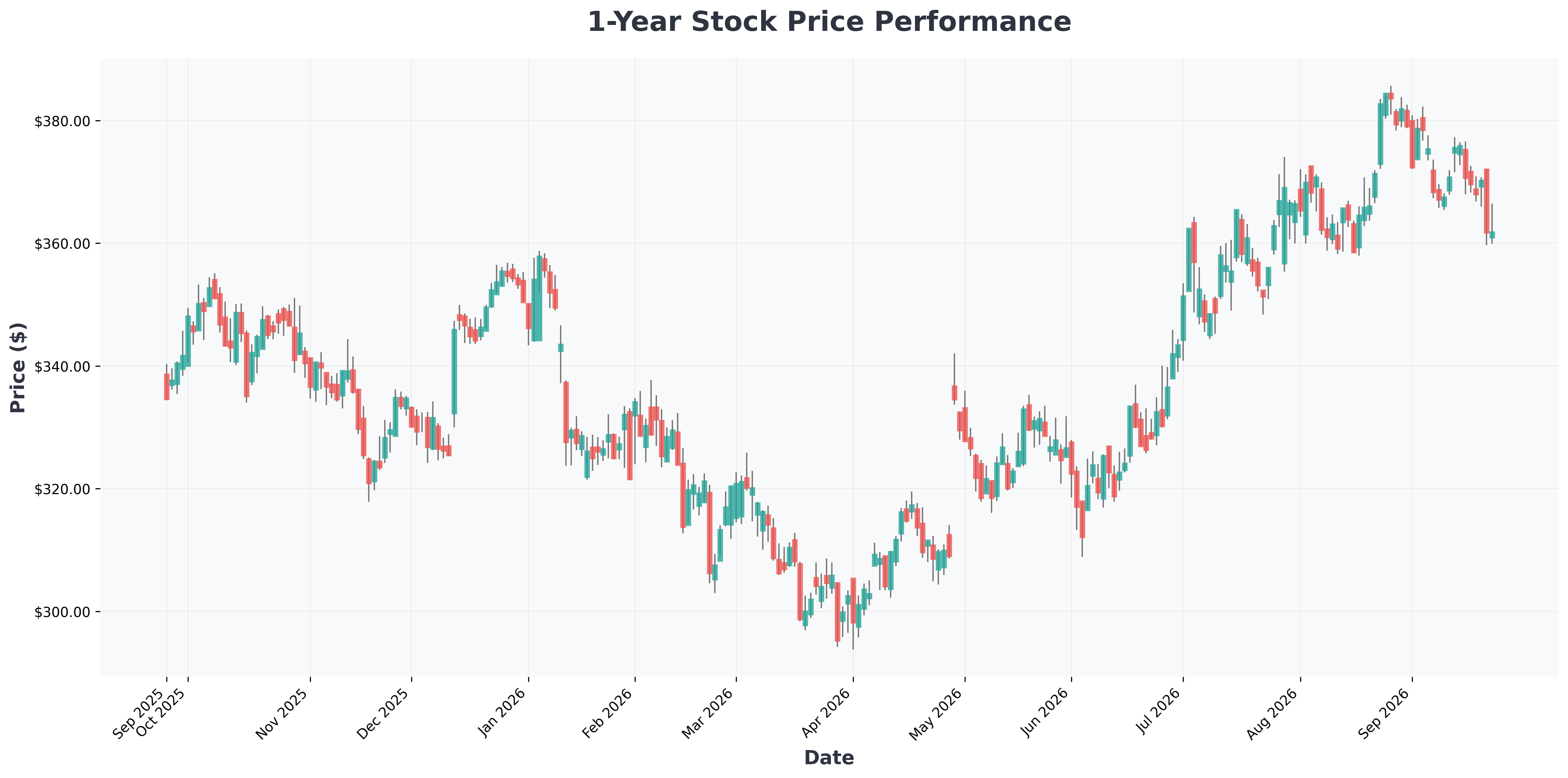
The financial sector's next move has Wall Street split. Here's both sides of the argument:

Where Smart Money Is Rotating 🎯
Vanguard's 10-year capital market assumptions paint a clear picture:
| Asset Class | Projected 10-Yr Annualized Return |
|---|---|
| Value stocks | 6.4% – 8.4% |
| Small-caps | 4.7% – 6.7% |
| International ex-US | 4.5% – 6.5% |
| Large-caps | 4.1% – 6.1% |
| Growth stocks | 3.6% – 5.6% |
Vanguard isn't alone. Fidelity expects small-caps to beat large-caps over the next 5–10 years, and most major financial firms project international and emerging market stocks will outperform their U.S. counterparts.
The thesis is straightforward: overvalued large-caps push investors to rotate out, while AI expansion reaches smaller, non-growth companies and international markets.
A Technical Note Worth Watching
From a technical perspective, the S&P 500 Equal Weight Index has been underperforming its cap-weighted sibling for most of the past 18 months — a classic signal of narrow market leadership. Historically, when equal-weight begins to close the gap (as it did briefly in 2022 before the bear market), it often precedes a rotation into value and small-caps. Keep an eye on that ratio as a leading indicator.
📊 In-Depth Fundamental Analysis
| Company | Share Price | P/E Ratio | P/B Ratio | ROE | Operating Margin (OPM) | Revenue Growth |
|---|---|---|---|---|---|---|
| AXP (American) | $306 | 18.54 | 6.02 | 34.38% | 20.32% | 12.80% |
| GS (Goldman) | $923 | 14.25 | 2.55 | 16.90% | 42.18% | 42.50% |
| HOOD (Robinhood) | $121 | 53.46 | 11.46 | 23.62% | 43.88% | 32.30% |
| JPM (JP) | $339 | 14.52 | 2.55 | 17.79% | 50.39% | 30.40% |
| SCHW (Charles) | $99 | 18.12 | 3.91 | 20.27% | 52.28% | 20.90% |
| V (Visa) | $368 | 31.32 | 19.50 | 61.19% | 66.13% | 14.40% |

The Bottom Line: Don't Double Down on Financials — Broaden Out 💡
So, should you buy more financial stocks?
No — and yes.
- ❌ No to loading up on financials-specific ETFs or small/mid-cap financial plays. The sector faces real headwinds, and concentrated bets on a struggling vertical rarely pay off.
- ✅ Yes to broadening your portfolio into value stocks, small-caps, mid-caps, and international equities. Within those allocations, you'll naturally get financial exposure — just not exclusively.
Portfolio diversification is always smart. But in the years ahead, going beyond large-cap growth isn't just smart — it's essential.
The S&P 500 already gives you the financials you need. What it doesn't give you is the diversification you'll want for the next decade. 🐂
All investing involves risk, including the potential loss of principal. Past performance does not guarantee future results. Consult a licensed financial advisor before making investment decisions.
