The Threat Nobody on Wall Street Wants to Name 🚨
When investors talk about Nvidia's (NASDAQ: NVDA) competition, the conversation almost always lands on Broadcom (NASDAQ: AVGO) and AMD (NASDAQ: AMD). Both are formidable chipmakers in their own right, but neither is positioned to truly disrupt Nvidia's grip on AI-accelerated data centers.
The real danger is far more uncomfortable to discuss: Nvidia's biggest customers are also its biggest long-term risk.
Amazon, Microsoft, and Meta collectively represent a massive share of Nvidia's data center revenue — and each of them is now building its own AI silicon. That is a structural problem, not a headline risk.

Why Broadcom and AMD Are Not the Real Threat
Let's clear the noise first. 📌
- AMD's Instinct GPUs are cheaper than Nvidia's, but they compete for the same general-purpose compute slot. AMD can chip away at share, but it cannot replace Nvidia's ecosystem (CUDA, software stack, developer lock-in) overnight.
- Broadcom plays a different game entirely — custom ASICs for hyperscalers. This is complementary to Nvidia's general-purpose GPU business, not directly cannibalistic.
Both can coexist with Nvidia inside a hyperscaler's rack. The math changes, however, when the hyperscaler decides to build the chip itself.
The In-House Silicon Stack Is Already Live
- Amazon: Inferentia2 for inference, Trainium for training and inference workloads.
- Microsoft: Maia 200 already deployed, Maia 300 reportedly imminent — with external sales chatter in the mix.
- Meta: Four generations of its Training and Inference Accelerator (MTIA) program shipped in just two years.
None of these chips will outsell Nvidia's flagship GPUs. That is not the point. The point is that every rack filled with an in-house chip is a rack Nvidia does not get paid for.
This is where the Street splits. Here's how the two camps are framing it right now:

The Margin Math That Should Worry NVDA Bulls
Nvidia's extraordinary gross margins — historically north of 70% in recent quarters — were never a permanent feature of the semiconductor landscape. They were the product of a specific condition: insatiable demand meeting constrained supply.
That condition is starting to shift.
| Factor | 2023–2024 Setup | 2025–2026 Setup |
|---|---|---|
| AI GPU supply | Severely constrained | Gradually loosening |
| Hyperscaler in-house chips | Early prototypes | Production scale |
| Nvidia pricing power | Maximum | Under pressure |
| Gross margin trajectory | Expanding | Flattening / compressing |
| Customer concentration | High | Still high — but self-supplying |
A Technical Read Worth Watching
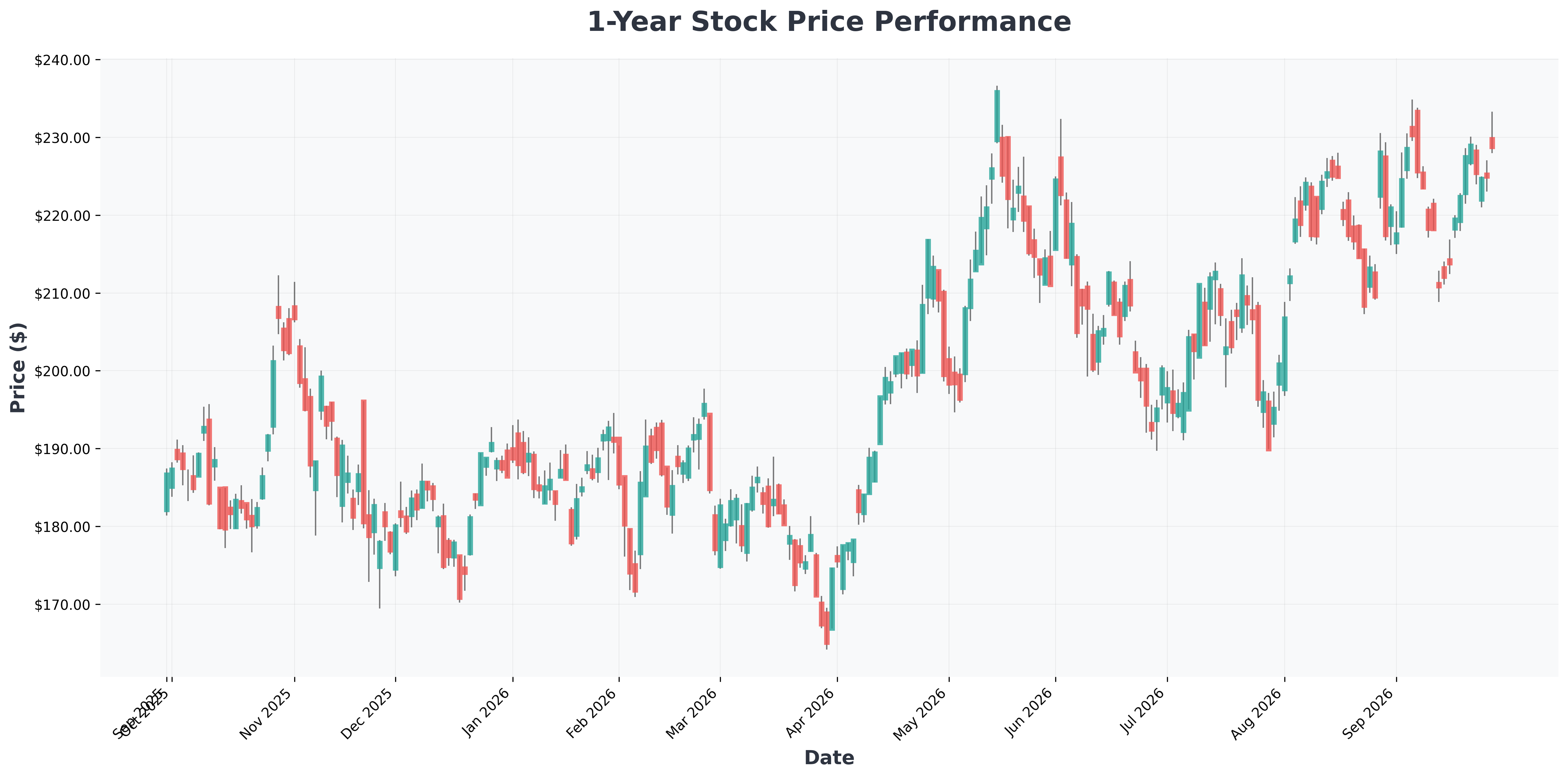
On the chart, NVDA has been oscillating around its 50-day moving average while the 200-day trendline continues to slope higher — a classic consolidation pattern that often precedes either a breakout or a breakdown. If the stock loses the 200-day on rising volume alongside any hyperscaler capex commentary, that would be a meaningful signal that the market is starting to price in margin normalization.
📊 In-Depth Fundamental Analysis
| Company | Share Price | P/E Ratio | P/B Ratio | ROE | Operating Margin (OPM) | Revenue Growth |
|---|---|---|---|---|---|---|
| AMD (Advanced) | $608 | 156.19 | 14.75 | 10.20% | 17.25% | 50.10% |
| AMZN (Amazon.com,) | $247 | 19.84 | 4.82 | 30.56% | 13.69% | 19.60% |
| AVGO (Broadcom) | $355 | 45.76 | 17.01 | 44.25% | 54.31% | 85.50% |
| META (Meta) | $739 | 27.83 | 7.21 | 29.85% | 34.83% | 28.00% |
| MSFT (Microsoft) | $509 | 28.40 | 8.54 | 34.04% | 45.11% | 17.70% |
| NVDA (NVIDIA) | $227 | 28.69 | 23.96 | 117.21% | 66.24% | 105.90% |

Scenario Planning: Where This Goes Next
Bull Scenario 🐂
- Hyperscaler in-house chips handle only inference workloads; training remains firmly Nvidia's domain.
- AI demand growth outpaces any self-supply substitution.
- Nvidia's annual chip cadence (one new architecture per year) keeps the performance gap wide enough that in-house silicon stays a cost play, not a capability play.
- Gross margins hold above 70% through the next fiscal year.
Bear Scenario 🐻
- Microsoft begins selling Maia 300 externally, opening a genuine second source for hyperscale AI compute.
- Amazon and Meta aggressively shift inference workloads — the highest-volume segment — to in-house silicon.
- Supply loosens faster than demand grows, and Nvidia's pricing power deflates.
- Gross margins compress toward the low-to-mid 60s, forcing a multiple reset even if revenue keeps growing.
The Bottom Line
Nvidia is not losing to Broadcom. It is not losing to AMD. The slow, structural risk is that its best customers slowly stop being customers — and that is the hardest kind of competition to see coming. Investors should watch hyperscaler capex calls and in-house silicon disclosures far more closely than any competitor's product launch.
