If you own an S&P 500 index fund, you might think you're getting broad diversification. But the data tells a different story. As of June 30, Nvidia (NVDA) has officially dethroned Apple (AAPL) as the top holding in the Vanguard S&P 500 ETF (VOO), a shift that underscores just how much the index has become a bet on the AI trade. 📌

The Changing of the Guard: AI Takes the Throne
For years, Apple was the undisputed king of the index. But the AI boom has reshuffled the deck. Nvidia's market value has exploded, pushing its weight in the S&P 500 to a staggering 7.50% of the entire fund. Apple, meanwhile, sits at 6.58%. This isn't just a symbolic change; it's a fundamental shift in the market's center of gravity.
To put it in perspective, a $10,000 investment in VOO now places about $750 in Nvidia and $658 in Apple. The top five companies — Nvidia, Apple, Microsoft, Amazon, and Alphabet — now account for roughly 25% of the entire fund. If you count both Alphabet share classes, that number jumps to nearly 28%. It's a level of concentration that many investors haven't fully grasped.
This shift has ignited a debate among investors. Is this a sign of a healthy, forward-looking market, or a dangerous bubble in the making?

The Weight of the Machine: A Double-Edged Sword
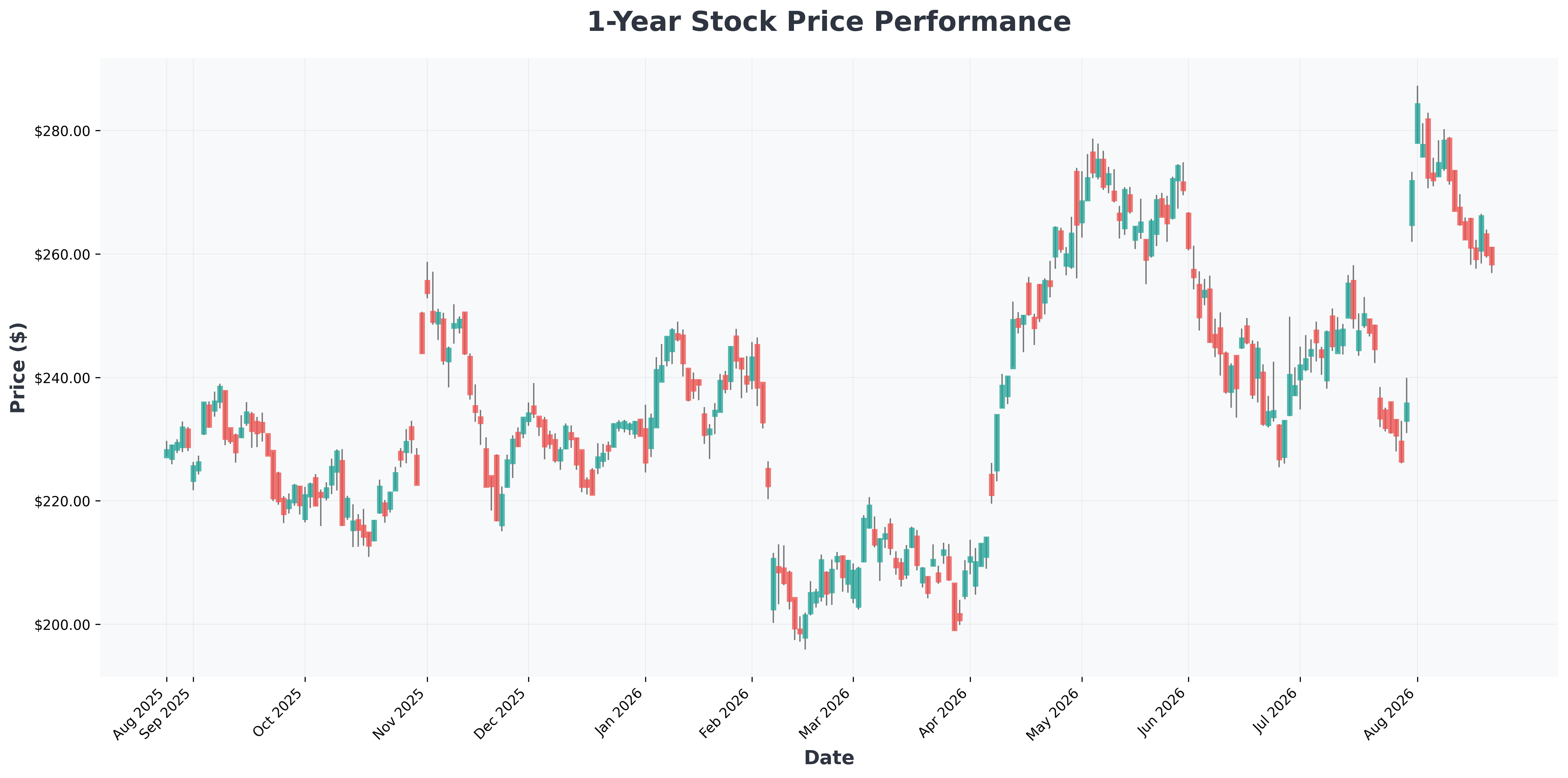
This concentration is a direct result of the market rewarding AI-driven growth. Nvidia's revenue grew an incredible 85% year-over-year, and the index simply adjusted to reflect that new value. No fund manager made a call; it's just how a market-cap-weighted index works. This is a feature, not a bug. It's how the market rewards winners.
But it also introduces a new kind of risk. A significant downturn in the AI sector would disproportionately hit your index fund. A hypothetical 20% drop in Nvidia's stock would shave about 1.5% off the entire S&P 500 fund. The 'diversification' you're getting is now heavily tilted toward a handful of tech giants.
📊 In-Depth Fundamental Analysis
| Company | Share Price | P/E Ratio | P/B Ratio | ROE | Operating Margin (OPM) | Revenue Growth |
|---|---|---|---|---|---|---|
| NVDA (NVIDIA) | $215 | 32.88 | 26.61 | 114.29% | 65.60% | 85.20% |
| MSFT (Microsoft) | $483 | 26.95 | 8.11 | 34.04% | 45.11% | 17.70% |
| MU (Micron) | $967 | 21.83 | 10.84 | 66.64% | 80.37% | 345.70% |
| GOOGL (Alphabet) | $345 | 17.30 | 6.77 | 48.68% | 34.03% | 24.20% |
| AAPL (Apple) | $309 | 35.48 | 42.03 | 148.75% | 32.62% | 16.40% |
| GOOG (Alphabet) | $342 | 17.16 | 6.71 | 48.68% | 34.03% | 24.20% |
| AMZN (Amazon.com,) | $259 | 20.79 | 5.06 | 30.56% | 13.69% | 19.60% |
| AVGO (Broadcom) | $368 | 61.31 | 19.99 | 37.28% | 48.99% | 47.90% |

Scenario & Conclusion: Navigating the New Normal
Best-Case Scenario: The AI build-out continues, and Nvidia's growth sustains. The index fund continues to ride the wave, delivering strong returns as the top holdings appreciate. The concentration works in your favor.
Worst-Case Scenario: AI demand cools off, or a major correction hits the tech sector. The index fund's performance would be disproportionately dragged down by its top-heavy holdings. The same mechanics that amplified gains on the way up would amplify losses on the way down.
The Bottom Line: An S&P 500 index fund remains one of the most effective ways to own the U.S. market. But its composition has changed. It is now, in meaningful part, a bet on the success of a few AI giants. Understanding this is the first step to making informed decisions about your portfolio. The index is self-correcting, but it's better to be aware of the weight it carries today.