The Magnificent Seven, Revisited 📌
The "Magnificent Seven" label — coined by BofA's Michael Hartnett in 2023 — once described an untouchable cohort of mega-cap tech leaders: Apple, Microsoft, Nvidia, Alphabet, Amazon, Meta, and Tesla. Two years later, the group has fractured. Amazon, Microsoft, and Tesla have all lagged the S&P 500 over the trailing twelve months, while Nvidia and Alphabet continue to press higher.
But here's the trap most retail investors fall into: assuming that the winners are the buys and the laggards are the sells. That logic is backwards. After running the numbers, I can build a credible bull case for six of the seven. There is exactly one name I would actively avoid — or sell if I already owned it.
That name is Microsoft (NASDAQ: MSFT).
⚠️ This is not a blanket condemnation of the company. It's a valuation and execution-risk argument. Read on before you hit the sell button.

Why Microsoft, Specifically? 🤔
Let's start with what the bulls are pointing at. In the quarter ending in June, Microsoft posted 18% year-over-year revenue growth, driven by 43% growth in Azure — the segment where its AI revenue is booked. Both figures beat consensus. Management is guiding for 45% AI revenue growth this quarter, backed by a $678 billion backlog of contracted business waiting to be recognized.
Impressive on the surface. But dig one layer deeper and the picture gets murkier.
The Backlog Is a Double-Edged Sword
That $678 billion backlog is only as valuable as Microsoft's ability to deliver it. AI data center hardware is scarce, and prices are still climbing. Every dollar of that contracted revenue carries an uncertain cost structure. If delivery costs spike, shareholders absorb the hit — not the customers who already signed.
Copilot's Enterprise Ceiling
Microsoft reports 30 million paid Copilot users on the professional tier, priced between $21 and $38 per month. Solid, but not the runaway success the bull thesis requires. Enterprises are increasingly asking a simple question: why pay for Copilot when ChatGPT, Gemini, and Claude offer comparable capability — often for free? Integration with Office is a moat, but moats erode.
Meanwhile, Windows continues to lose relevance as mobile devices displace PCs, and Xbox revenue fell 10% last quarter after a 5% decline the quarter before. The diversification story is thinning.
Wall Street is split on Microsoft right now. Here's how the two camps are framing the argument:

The Numbers Behind the Concern 📊
| Metric | Value | Signal |
|---|---|---|
| Market Cap | $3.8T | Mega-cap premium priced in |
| Current Price | $516.17 | Near 52-week high of $553.72 |
| 52-Week Range | $349.20 – $553.72 | Wide swing = high volatility |
| Gross Margin | 67.94% | Strong, but AI capex pressure ahead |
| Dividend Yield | 0.71% | Negligible income cushion |
| Azure Growth (Q ending June) | +43% YoY | Headline beat |
| Xbox Revenue | -10% QoQ | Deteriorating segment |
Technical Context 🔍
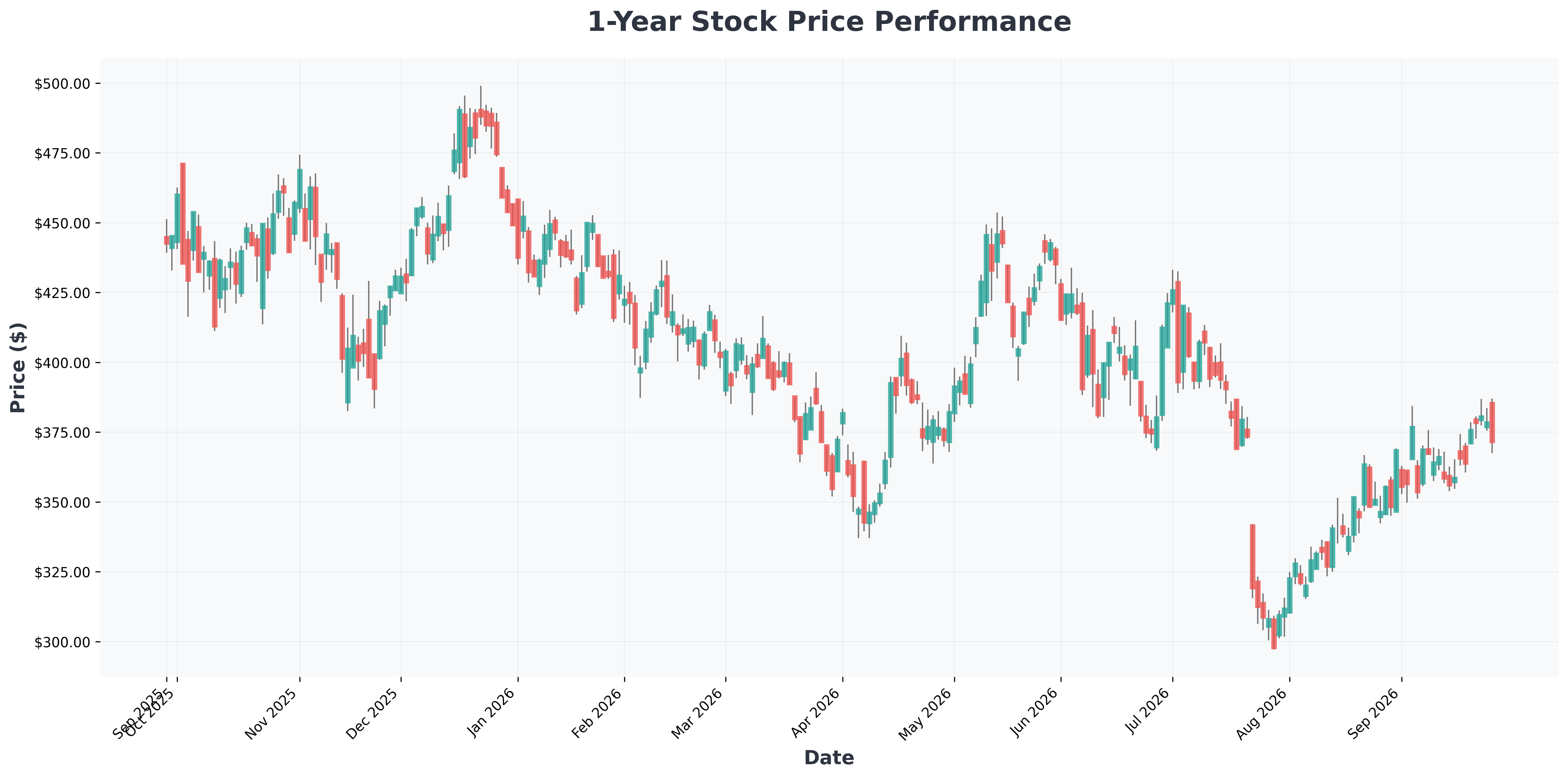
From a chart perspective, MSFT is trading in the upper third of its 52-week range but has failed to reclaim the $553.72 high on multiple attempts — a classic lower-high structure that often precedes consolidation. The $497 support zone (recent day's low) is the first line of defense; a clean break below it would open the door to the $450–$470 region. Historically, mega-cap tech names that stall after a 40%+ run tend to digest for 2–3 quarters before resuming trend — meaning the opportunity cost of holding here is real.
📊 In-Depth Fundamental Analysis
| Company | Share Price | P/E Ratio | P/B Ratio | ROE | Operating Margin (OPM) | Revenue Growth |
|---|---|---|---|---|---|---|
| META (Meta) | $752 | 28.33 | 7.33 | 29.85% | 34.83% | 28.00% |
| MSFT (Microsoft) | $516 | 28.72 | 8.67 | 34.04% | 45.11% | 17.70% |
| NVDA (NVIDIA) | $225 | 28.49 | 23.73 | 117.21% | 66.24% | 105.90% |
| AAPL (Apple) | $341 | 39.07 | 46.34 | 148.75% | 32.62% | 16.40% |
| GOOGL (Alphabet) | $344 | 17.27 | 6.76 | 48.68% | 34.03% | 24.20% |
| AMZN (Amazon.com,) | $250 | 20.09 | 4.88 | 30.56% | 13.69% | 19.60% |
| GOOG (Alphabet) | $341 | 17.12 | 6.70 | 48.68% | 34.03% | 24.20% |
| TSLA (Tesla,) | $372 | 344.55 | 16.92 | 4.67% | 1.41% | 25.50% |

Scenario Planning: Where MSFT Goes Next 🎯
🐂 Best-Case Scenario
- Azure AI revenue converts on schedule, backlog monetizes at expected margins.
- Copilot enterprise adoption accelerates past 50M paid seats.
- Stock reclaims $553 and pushes toward $600 within 12 months.
🐻 Worst-Case Scenario
- AI data center costs inflate, compressing Azure margins.
- Enterprises standardize on cheaper alternatives (Gemini, Claude, ChatGPT Enterprise).
- Xbox and Windows continue to erode, forcing downward guidance revisions.
- Stock retests $450 or lower as multiple compresses.
The Verdict
Microsoft is not a bad company. It is a fully-priced company with an execution-dependent story. Three months ago, the market treated it as a liability. One strong quarter later, it's a darling again. That kind of sentiment whiplash rarely ends well for buyers chasing the move.
If you own MSFT, this is a reasonable moment to trim. If you're considering initiating, wait for either a pullback to the $450–$470 zone or concrete evidence that Copilot is winning the enterprise AI assistant war. Until then, patience pays.
All investing involves risk of loss. Position sizing and time horizon matter more than any single thesis.
