The digital economy's backbone is getting a massive upgrade. According to a new MarketsandMarkets™ report, the global Data Center Solutions Market is projected to grow from $535.45 billion in 2026 to a staggering $1,336.55 billion by 2031, registering a robust CAGR of 20.1%. 🚨
This isn't just about building bigger warehouses for servers. The report highlights a shift toward intelligent infrastructure—where software-defined networking, liquid cooling, and AI-driven automation are becoming as critical as the physical hardware itself. For investors, this represents a multi-year growth cycle fueled by the insatiable demand for AI compute and cloud services.

The Core Growth Drivers: More Than Just Chips
While NVIDIA often grabs the headlines, this market expansion is broader. The report breaks down the growth into key segments:
- IT Infrastructure: This segment still holds the largest share, driven by demand for high-performance servers and GPU-accelerated systems.
- Software is the Fastest Mover: The software segment is growing at a blistering 24.7% CAGR. This includes DCIM (Data Center Infrastructure Management), AIOps, and orchestration platforms. This signals a shift where operational efficiency is as valuable as raw compute power.
- The AI Effect: The rise of large language models and enterprise AI requires high-density computing environments. This is pushing the adoption of advanced cooling technologies (like liquid cooling) and intelligent power management systems.
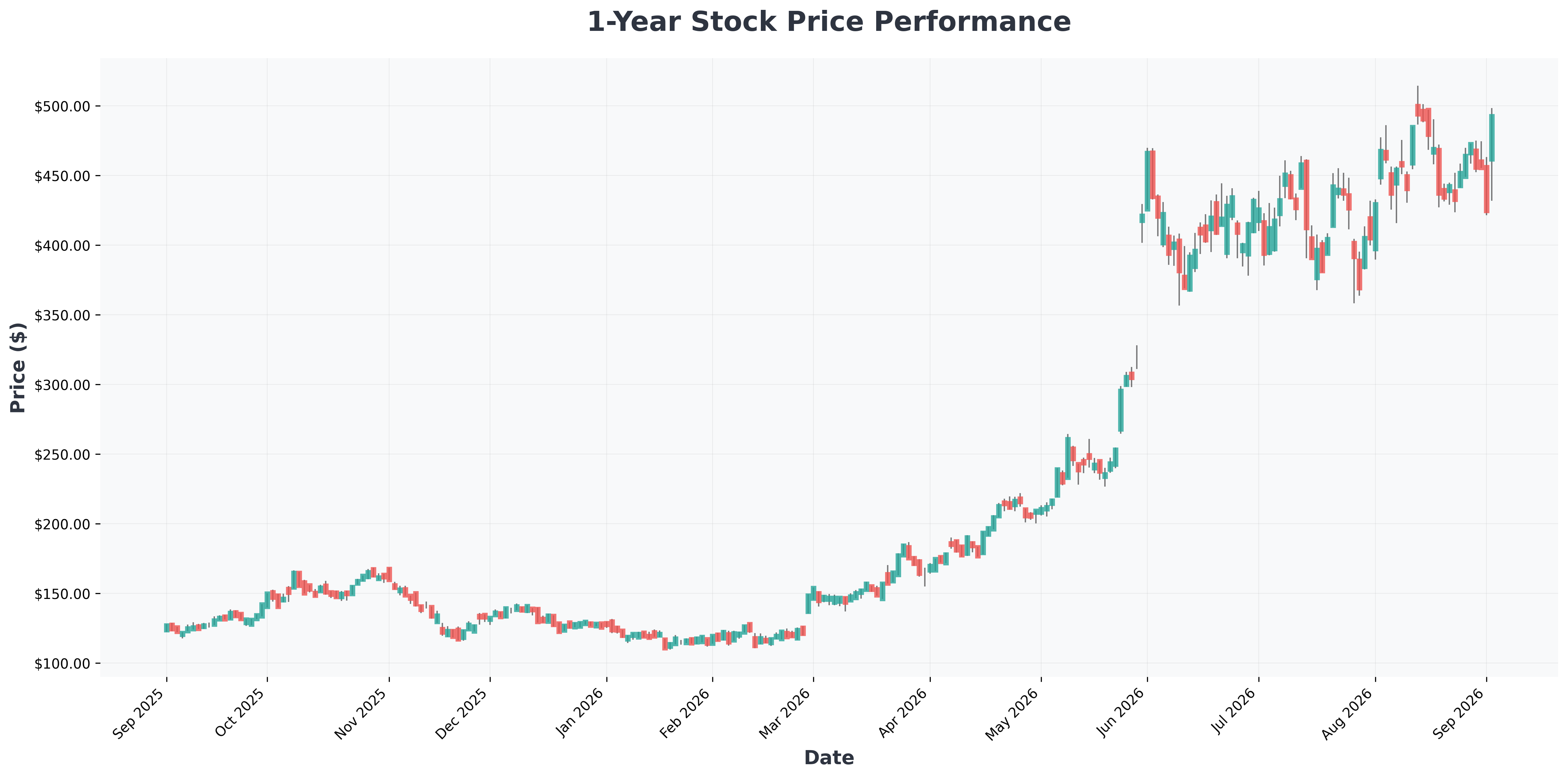
Is this growth rate sustainable, or are we in a capex bubble? The market is split on this issue.

Market Leaders & The Competitive Landscape
The competitive arena is a mix of legacy hardware giants and agile tech leaders. Key players identified include:
- Dell Technologies, HPE, Lenovo: Dominating the server and storage infrastructure space.
- NVIDIA, Broadcom: Supplying the critical silicon and networking chips that power AI workloads.
- Schneider Electric: A leader in power and cooling solutions.
- Cisco & Huawei: Providing the networking fabric and full-stack solutions.
Analyst Insight: The report suggests that the next generation of data centers will be defined by 'intelligence as much as capacity.' The winners will be companies that integrate hardware with software-driven visibility and automation.
📊 In-Depth Fundamental Analysis
| Company | Share Price | P/E Ratio | P/B Ratio | ROE | Operating Margin (OPM) | Revenue Growth |
|---|---|---|---|---|---|---|
| IBM (International) | $235 | 20.84 | 6.42 | 34.46% | 16.55% | 1.10% |
| SBGSY (Schneider) | $67 | 33.83 | 6.57 | 18.62% | 18.20% | 9.80% |
| LNVGY (Lenovo) | $80 | 28.81 | 7.46 | 14.67% | 0.07% | 43.10% |
| SMCIP (Super) | $64 | 0.00 | 3.83 | 21.47% | 13.38% | 93.20% |
| SMCI (Super) | $38 | 11.62 | 2.27 | 21.47% | 13.38% | 93.20% |
| NVDA (NVIDIA) | $228 | 28.92 | 24.09 | 117.21% | 66.24% | 105.90% |
| AVGO (Broadcom) | $357 | 45.67 | 20.83 | 37.28% | 48.99% | 47.90% |
| DELL (Dell) | $516 | 30.06 | -238.74 | 0.00% | 11.46% | 57.70% |
| HPE (Hewlett) | $54 | 50.88 | 2.85 | 6.31% | 8.70% | 40.00% |
| CSCO (Cisco) | $109 | 32.62 | 8.53 | 27.32% | 27.70% | 17.60% |

Scenario Analysis: What's Next for Investors?
While the long-term trend is bullish, investors should consider the potential paths forward.
| Scenario | Projected Outcome | Key Risk/Driver |
|---|---|---|
| Bull Case 🐂 | Market reaches the upper end of projections, potentially exceeding $1.4 trillion by 2031. | Rapid AI adoption by enterprises and governments. Successful implementation of energy-efficient cooling at scale. |
| Base Case ⚖️ | Market follows the projected 20.1% CAGR, hitting $1.33 trillion. | Steady growth in cloud migration and AI inference workloads. |
| Bear Case 🐻 | Growth slows to a 15-16% CAGR due to a cyclical downturn in IT spending or power grid constraints. | Macro-economic recession leading to delayed data center projects. |
Conclusion: The data center solutions market is a structural growth story, not just a cyclical one. The convergence of AI, edge computing, and sustainability requirements makes this a critical sector to watch. For long-term investors, exposure to the software and cooling segments might offer higher growth potential than traditional hardware.
