A New Era at Berkshire Hathaway
Warren Buffett's retirement as CEO on Dec. 31 didn't just mark the end of an era — it handed the keys to one of Wall Street's most scrutinized portfolios to his hand-picked successor, Greg Abel. And Abel isn't wasting time. 🚨
In his first quarter at the helm, Abel jettisoned 16 positions from Berkshire's portfolio, yet the one thing he kept intact is the defining trait of the Buffett era: extreme concentration.
As of the Sept. 4 close, nearly 82% ($294 billion) of Berkshire's $360 billion invested assets sit in just 10 superstar stocks. That's not a diversified fund — that's a conviction portfolio.

The Top 10 Holdings: Tech Finally Gets a Seat at the Table
Perhaps the most striking shift under Abel is that tech stocks are officially on the menu. While Apple (AAPL) retains its crown as Berkshire's largest holding, Abel has aggressively built a position in Alphabet (GOOGL/GOOG) since the year began.
The logic is straightforward. Alphabet's Google search engine commands a near-monopoly on global internet traffic — a fortress-like foundation. But the real excitement lies in Google Cloud, where generative AI and large language model integration have sent sales parabolic: 82% year-over-year growth in the June-ended quarter. Higher-margin, faster-growing, and increasingly central to the AI economy — this is a different kind of Berkshire bet.
Financials Remain the Backbone 💰
Don't mistake the tech pivot for a wholesale strategy shift. American Express, Bank of America, Moody's, and Chubb collectively represent nearly 29% of Berkshire's invested assets.
The beauty of financials is their cyclical nature. Economic expansions let Amex and BofA lend prudently and generate meaningful interest income — and patient capital like Berkshire's is perfectly suited to ride out the inevitable downturns.
The market is split on whether Abel's concentration strategy is genius or reckless. Here's both sides:

Buffett's 'Indefinite' Holdings Aren't Going Anywhere
In Buffett's 2023 letter to shareholders, he outlined eight stocks he viewed as indefinite/forever holdings: Coca-Cola, Amex, Occidental Petroleum, and all five Japanese trading houses — Mitsubishi among them.
Abel's concentration strategy reinforces that these positions aren't moving. Coca-Cola (held since 1988) and Amex (since 1991) carry otherworldly yields on cost, but more importantly, they represent safe, reasonably valued, dividend-paying businesses positioned to benefit from global economic growth.
Portfolio Snapshot: The 10 Superstar Stocks
| Ticker | Company | Sector |
|---|---|---|
| AAPL | Apple | Technology |
| AXP | American Express | Financials |
| GOOGL/GOOG | Alphabet | Technology |
| KO | Coca-Cola | Consumer Staples |
| BAC | Bank of America | Financials |
| CVX | Chevron | Energy |
| OXY | Occidental Petroleum | Energy |
| MTSUY | Mitsubishi | Trading House |
| MCO | Moody's | Financials |
| CB | Chubb | Financials |
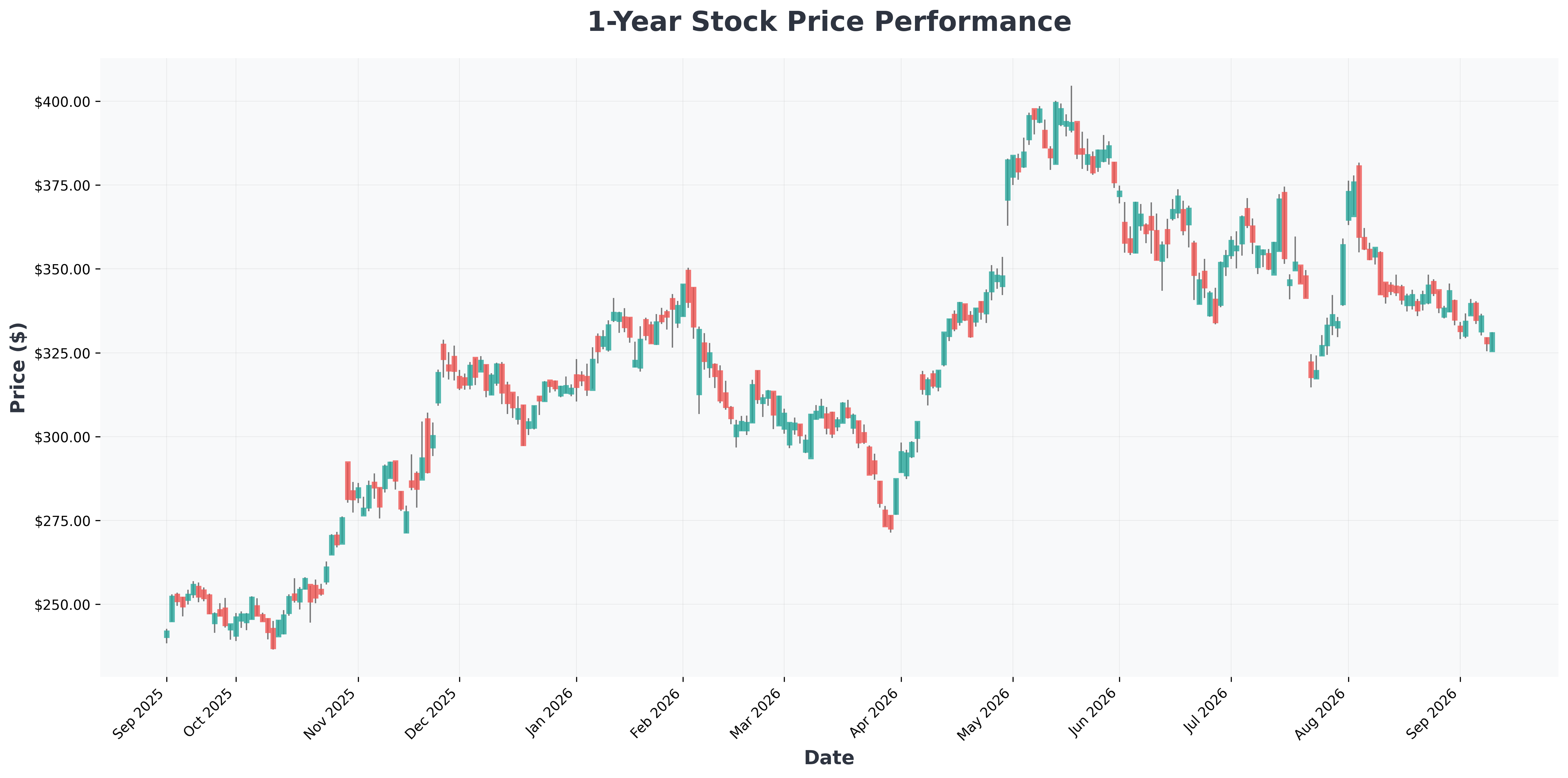
Technical note: Berkshire's concentration mirrors the S&P 500's own top-heavy structure, where the top 10 names now represent over 35% of the index. Historically, such concentration has preceded both outsized rallies (1999) and sharp reversals (2000). The key differentiator here is Berkshire's valuation discipline — unlike the dot-com era, these holdings trade at reasonable multiples with real earnings.
📊 In-Depth Fundamental Analysis
| Company | Share Price | P/E Ratio | P/B Ratio | ROE | Operating Margin (OPM) | Revenue Growth |
|---|---|---|---|---|---|---|
| AAPL (Apple) | $332 | 38.10 | 45.15 | 148.75% | 32.62% | 16.40% |
| AXP (American) | $325 | 19.70 | 6.39 | 34.38% | 20.32% | 12.80% |
| BAC (Bank) | $63 | 14.48 | 1.59 | 11.20% | 38.30% | 16.80% |
| CB (Chubb) | $338 | 11.99 | 1.73 | 14.82% | 23.53% | 6.10% |
| CVX (Chevron) | $214 | 20.62 | 2.21 | 12.23% | 21.87% | 53.50% |
| GOOG (Alphabet) | $335 | 16.84 | 6.59 | 48.68% | 34.03% | 24.20% |
| GOOGL (Alphabet) | $338 | 16.99 | 6.65 | 48.68% | 34.03% | 24.20% |
| KO (Coca-Cola) | $88 | 26.51 | 10.51 | 42.05% | 34.87% | 6.70% |
| MCO (Moody's) | $475 | 30.16 | 27.19 | 76.93% | 49.47% | 15.10% |
| MTSUY (Mitsubishi) | $33 | 24.09 | 1.96 | 10.08% | 2.90% | 22.80% |
| OXY (Occidental) | $61 | 18.13 | 1.84 | 10.63% | 45.44% | 53.40% |

Scenario Analysis: What Could Go Right — and Wrong
🐂 Best-Case Scenario
- Alphabet's AI-driven cloud growth continues compounding at 50%+ annually.
- Financials benefit from a soft-landing economy with steady rate environment.
- Japanese trading houses deliver on currency-hedged returns.
- Outcome: Berkshire's concentrated bets outperform the S&P 500 for a fifth consecutive year.
🐻 Worst-Case Scenario
- AI capex cycle cools and Alphabet's cloud growth decelerates sharply.
- A hard recession pressures Amex and BofA credit quality.
- Energy holdings (Chevron, OXY) suffer from demand destruction.
- Outcome: 82% concentration amplifies drawdowns — a lesson Buffett learned in 1998 and 2008.
The Bottom Line
Abel is proving he's no caretaker. He's making the portfolio his own — adding tech, trimming dead weight, and doubling down on the conviction bets that defined Buffett's tenure. The question isn't whether concentration works; it's whether Abel's version of it can match the Oracle's track record. 📌
Investors should weigh concentration risk carefully. A portfolio where 82% rides on 10 names offers no hiding place when sentiment turns.
