Why ASML Deserves a Second Look 👀
When investors talk about AI, the conversation usually starts and ends with Nvidia, Microsoft, and Alphabet. But there is a quieter, arguably more strategic way to play the AI infrastructure boom — and it trades on the Nasdaq under the ticker ASML.
ASML is a Dutch manufacturer of advanced semiconductor equipment, and it holds a position no other company on Earth can claim: it is the world's only commercial supplier of extreme ultraviolet (EUV) lithography systems. Without EUV, there is no cutting-edge AI chip. Period. 📌
That single fact makes ASML a structural chokepoint in the AI supply chain — and one that long-term investors should not ignore.

The Moat Nobody Can Cross 🏰
Every generation of AI chip — Nvidia's Hopper, Blackwell, and the upcoming Vera Rubin platform — is built on smaller, faster, and more energy-efficient transistors. Those transistors are printed onto silicon wafers using lithography machines, and the most advanced of those machines only come from one place: ASML.
Fabricators like Taiwan Semiconductor (TSMC), Samsung, and Intel all depend on ASML's equipment to produce leading-edge chips. As AI models grow more sophisticated, demand for increasingly powerful semiconductors should only accelerate.
High-NA EUV: The Next Frontier
In September, ASML announced an expanded collaboration with Intel Foundry to accelerate adoption of High Numerical Aperture EUV (High-NA EUV). Intel has already processed more than 1 million wafers using the technology across testing, development, and manufacturing — including selected layers of its Panther Lake processors.
ASML also expanded its partnership with Samsung, which plans to introduce High-NA EUV into advanced DRAM memory manufacturing by 2028. Meanwhile, TSMC is collaborating with ASML on larger photomasks, targeting high-volume High-NA EUV manufacturing for advanced nodes beginning in 2030.
The debate over ASML's valuation is heating up ahead of Q3 earnings. Here's how bulls and bears are framing the trade:
The Numbers Behind the Story 📊
ASML reports third-quarter results on Oct. 14, and the expectations are aggressive.
| Metric | Q3 2026 (Est.) | Q3 2025 (Actual) | Change |
|---|---|---|---|
| Revenue | €11.68B ($13.1B) | ~€7.5B | +55% |
| EPS | €10.66 | €5.49 | +94% |
For context, Q2 2026 revenue came in at €9.3 billion with net income of €2.9 billion, versus €7.7 billion and €2.3 billion respectively in Q2 2025. The trend line is unmistakable.
Key Snapshot
- Market Cap: ~$686B
- Current Price: ~$1,750
- 52-Week Range: $946.11 – $1,999.96
- Gross Margin: 52.73%
- Dividend Yield: 0.51%
Technical Note 🔍
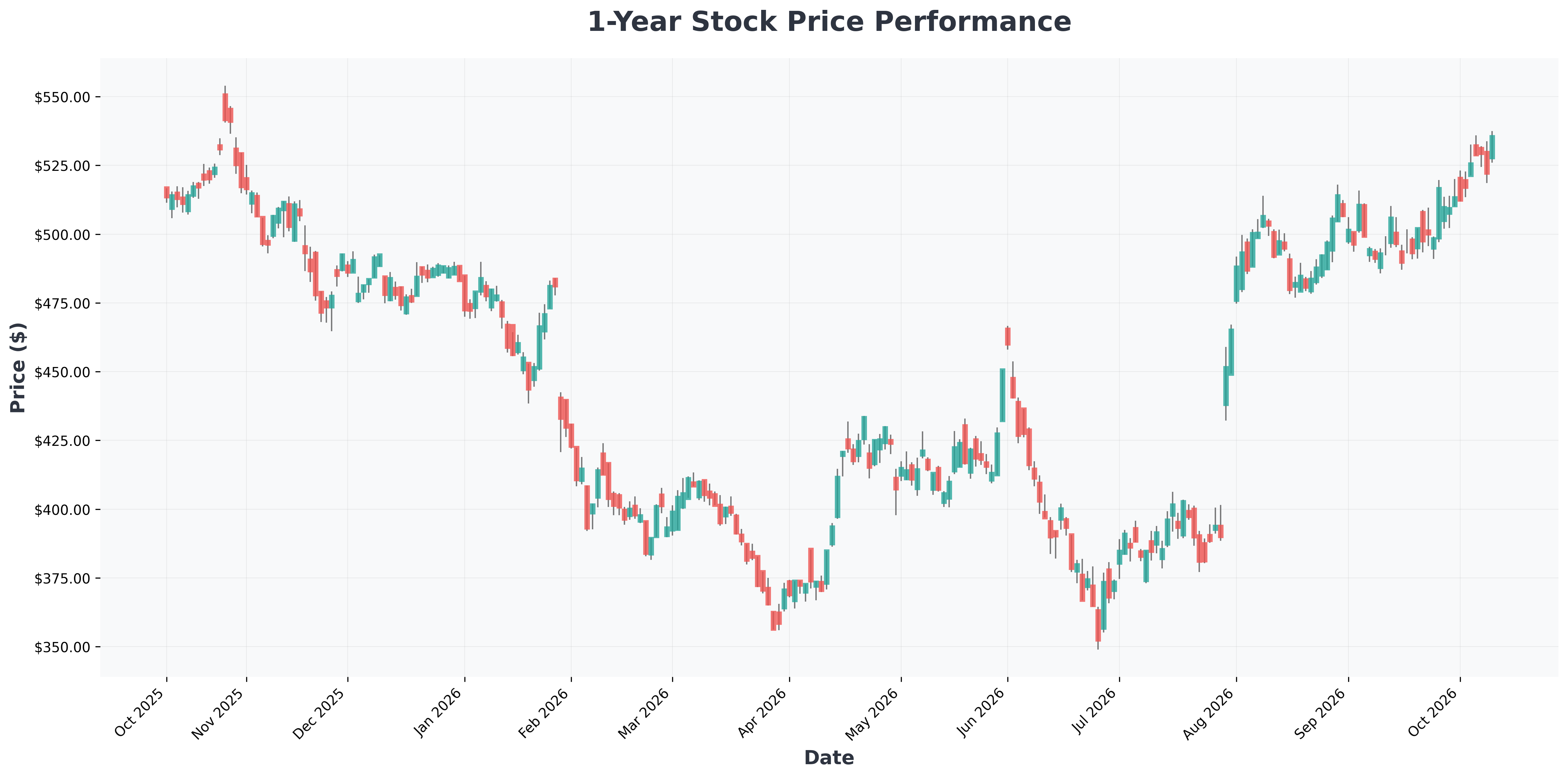
ASML is currently consolidating below its 52-week high near $2,000, with the $1,700–$1,720 zone acting as a near-term support shelf. Historically, ASML has shown a pattern of sharp breakout moves following Q3 earnings beats, often retesting prior highs within 4–6 weeks when guidance is raised.
📊 In-Depth Fundamental Analysis
| Company | Share Price | P/E Ratio | P/B Ratio | ROE | Operating Margin (OPM) | Revenue Growth |
|---|---|---|---|---|---|---|
| ASML (ASML) | $1,750 | 56.81 | 1520.28 | 53.94% | 37.06% | 21.30% |
| GOOG (Alphabet) | $349 | 17.51 | 6.86 | 48.68% | 34.03% | 24.20% |
| GOOGL (Alphabet) | $353 | 17.70 | 6.93 | 48.68% | 34.03% | 24.20% |
| INTC (Intel) | $101 | 0.00 | 5.84 | -10.71% | 12.19% | 25.40% |
| MSFT (Microsoft) | $541 | 30.15 | 9.09 | 34.04% | 45.11% | 17.70% |
| NVDA (NVIDIA) | $226 | 28.61 | 23.87 | 117.21% | 66.24% | 105.90% |
| TSM (Taiwan) | $444 | 32.29 | 91.48 | 39.97% | 60.34% | 36.00% |

Scenario Analysis: Where Does ASML Go From Here? 🎯
🐂 Best-Case Scenario
- Q3 beat + raised FY guidance on High-NA EUV momentum
- Intel, Samsung, and TSMC High-NA adoption accelerates ahead of schedule
- Stock breaks $2,000 and targets new all-time highs
- AI capex cycle extends through 2027
🐻 Worst-Case Scenario
- Semiconductor spending cycle cools into 2027
- Export restrictions tighten on China exposure
- High-NA EUV adoption slips beyond 2030 targets
- Stock retests the $1,400–$1,500 support band
The Bottom Line
Nvidia designs the AI brains. TSMC builds them. But ASML makes them possible. The company's technological leadership creates an extraordinary competitive moat that few businesses on the planet can replicate.
Risks are real — cyclical semiconductor spending, export restrictions, and the rising cost of developing ever-more-complex equipment. But for long-term investors looking beyond the obvious AI names, ASML may be the most overlooked — and most essential — play in the entire infrastructure boom. 💡
All investing involves risk, including the possible loss of principal. Past performance does not guarantee future results.
